
Contents
Aesthetic dentistry
Porcelain Veneers
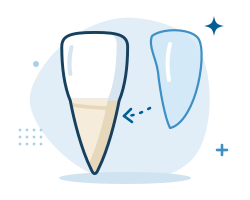
Porcelain veneers are thin, custom-made shells of porcelain, about half a millimetre thick (the thickness of a fingernail), bonded onto the front of the teeth.
What are porcelain veneers?
Porcelain is harder than enamel, so it resists wear and staining. Veneers can change the appearance of the teeth with only a little reshaping of the natural tooth, which can avoid more invasive preparation such as a dental crown.
Who are they for?
Veneers are used for:
- Chipped teeth
- Crooked teeth
- Cracked teeth
- Discoloured teeth
- Spaced teeth
- Misshapen teeth
- Misaligned teeth
How does the process work?
- First session, consultation: face and smile analysis, oral examination, your cosmetic needs and expectations.
- Second session, preparation: the tooth surfaces are reshaped slightly under local anaesthesia and impressions are taken. A wax model is prepared according to your expectations and discussed with you; provisional veneers are made from this model.
- Third session, application: the veneers are tried on, small corrections are made if necessary, and they are bonded to the teeth permanently.
How many sessions?
Treatment usually takes three to four sessions.
Advantages and disadvantages
- Minimally invasive: little preparation of the tooth surface
- Noticeable change in appearance
- Short clinic time (3-4 sessions)
- Colour and shape that last
- Natural appearance
- Sensitivity during treatment (because of the reshaping) and for 2-4 weeks after bonding
- You need to be careful when biting hard foods, such as apples
Last updated: Editor: Dent4 Levent Ağız ve Diş Sağlığı, dent4levent@gmail.com