
Contents
Preventive care
Children's Dental Health and Preventive Care
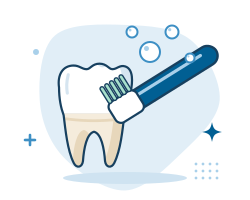
Baby teeth should be treated just like permanent teeth. Extracting them on the grounds that they will fall out anyway can cause many problems.
What is preventive dentistry for children?
If a baby tooth is lost for any reason before the permanent tooth underneath is due to come through, the permanent teeth may become crowded. Preventive dentistry helps to avoid this; preventive treatments aim to stop decay before it starts.
Fluoride application
Fluoride can be applied every six months from the age of five. The dentist applies a fluid topical gel to the teeth in special trays for 2-4 minutes. Your child should not eat or drink for half an hour afterwards.
Fissure sealants
Tooth decay usually starts in the deep grooves (fissures) on the chewing surfaces of the teeth. Newly erupted teeth are more prone to decay because their enamel has not fully matured. Fissure sealants are especially useful at around 5-7 years, when the 6-year molars come through, and on the 12-year molars.
Who is it for?
- Babies whose first teeth are coming through: brushing should start as soon as the teeth appear, with a finger brush for babies and a children's toothbrush later.
- Children from the age of five: fluoride can be applied every six months.
- Children whose 6-year and 12-year molars are coming through: fissure sealants can be applied.
- All children from the age of 7: an orthodontic examination helps to spot orthodontic problems early.
- Children who cannot give up a bottle, a dummy or thumb sucking: these habits can affect the teeth and jaws, and an orthodontist should examine them.
- Children who grind their teeth in their sleep: the cause needs to be found first (see bruxism).
How does the process work?
At the examination, your child's teeth, risk of decay and the development of the teeth and jaws are assessed. Fluoride application and fissure sealants are simple procedures that take a few minutes.
How many sessions?
- Fluoride application: a single 2-4 minute application, which can be repeated every six months.
- Fissure sealant: a single procedure of a few minutes.
- Check-ups: every six months, unless your dentist advises otherwise.
Frequently asked questions
Should baby teeth be treated?
Yes, baby teeth should be treated just like permanent teeth. Extracting them on the grounds that they will fall out anyway can cause many problems.
When should children start brushing their teeth?
Brushing should start as soon as the teeth come through. Finger brushes are recommended for babies, followed later by children's toothbrushes.
How and when is fluoride applied?
It can be applied every six months from the age of five. The dentist applies a fluid topical gel to the teeth in special trays for 2-4 minutes; fluoride builds up on the teeth in the first minute. Nothing should be eaten or drunk for half an hour afterwards.
What is a fissure sealant and how is it applied?
Tooth decay usually starts in the deep grooves (fissures) on the chewing surfaces. Newly erupted teeth are more prone to decay because their protective enamel has not fully matured. Sealants are especially useful at around 5-7 years, when the 6-year molars come through, and on the 12-year molars. It is a simple procedure of a few minutes, applied to each tooth with grooves and pits.
My child fell and a front tooth came out. What should I do?
Find the tooth as soon as possible and hold it without touching the root. Keep the tooth in a liquid such as water or milk in a clean container and go to a dentist straight away.
How often should I see the dentist?
Unless your dentist advises otherwise, a check-up every six months is recommended.
Last updated: Editor: Dent4 Levent Ağız ve Diş Sağlığı, dent4levent@gmail.com