
Contents
Implants, surgery and gums
Gum Disease and Gum Aesthetics
Periodontal (gum) disease is inflammation of the gums and damage to the bone around the teeth. It is one of the important causes of tooth loss.

What is gum disease?
You may not know that you have gum disease, because it is often not painful and some people have no symptoms. This is one reason regular check-ups are important. Caught early, gum disease can be treated and its effects may be reversed.
Gum disease is caused by the same bacteria that cause tooth decay. It begins when bacteria in the mouth feed on sugary carbohydrates and produce plaque, a sticky, colourless film. If plaque isn't removed, the damage goes beyond the tooth to the gums and other supporting structures.
Gingivitis
If plaque is not cleaned off regularly, it irritates the gums so they become red, swollen and shiny and may bleed on brushing. Gingivitis is reversible: with effective brushing twice a day and daily flossing, the gums recover.
Periodontitis
Untreated gingivitis may progress to periodontitis. The gums pull away from the teeth, leaving pockets that trap more plaque. Over time this causes gum recession and bone loss; untreated, teeth may fall out. Periodontal pockets are not reversible, but appropriate treatment and regular cleaning can stop the progress.
Gum aesthetics
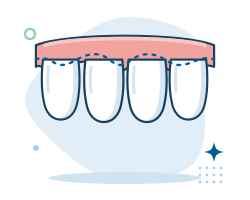
If your gums are healthy but irregular, they can be reshaped with a small procedure. For people with a high smile line (more than 4 mm of gum showing when smiling) or uneven gum levels on the front teeth, gingivectomy can correct the gum line. A thick, uneven gum appearance can be improved with gingivoplasty under local anaesthesia.
Who is it for?
Anyone with bleeding, swollen or receding gums, and people who want to improve an uneven gum line once their gums are healthy. To prevent gum disease, plaque and tartar need to be controlled with careful brushing, flossing and regular dental visits; tartar can only be removed by your dentist.
How does the process work?
Scaling
For gingivitis, the teeth are cleaned thoroughly with special instruments (scaling). Your dentist may recommend an antiseptic mouthwash and show you how to brush and floss the areas you are missing. For periodontitis, deeper scaling removes plaque and tartar from the pockets, sometimes under local anaesthesia, and the pockets are monitored in the following months.
Gum surgery
If the pockets are too deep to clean by scaling, gum surgery may be needed: small incisions allow the gum to be lifted so the periodontologist can clean the deep pocket, and the gum is then stitched back in place. For any treatment to work, daily cleaning at home is essential.
How many sessions?
Deeper scaling for periodontitis may be done over several appointments. The number of sessions depends on the condition of the gums and is planned at the examination.
Last updated: Editor: Dent4 Levent Ağız ve Diş Sağlığı, dent4levent@gmail.com